
PCC Joy Allen explains, in her own words, why mental health must be seen not only as a health issue, but also as a community safety issue. She also highlights the day-to-day impact on police officers and staff, and why supporting their mental health is equally essential.
Every day across the UK, police officers are responding not only to crime, but to people in crisis, vulnerable individuals experiencing trauma, addiction, severe anxiety, suicidal thoughts or mental ill health with nowhere else to turn.
Across County Durham and Darlington, there are families worried about loved ones, young people suffering in silence, battling anxiety and trauma, victims trying to rebuild their lives after abuse or violence and individuals facing addiction, loneliness or emotional distress.
As Police and Crime Commissioner, I see first-hand the impact poor mental health can have on individuals, victims, families and communities. I also see the growing pressure this places on frontline policing and emergency services.
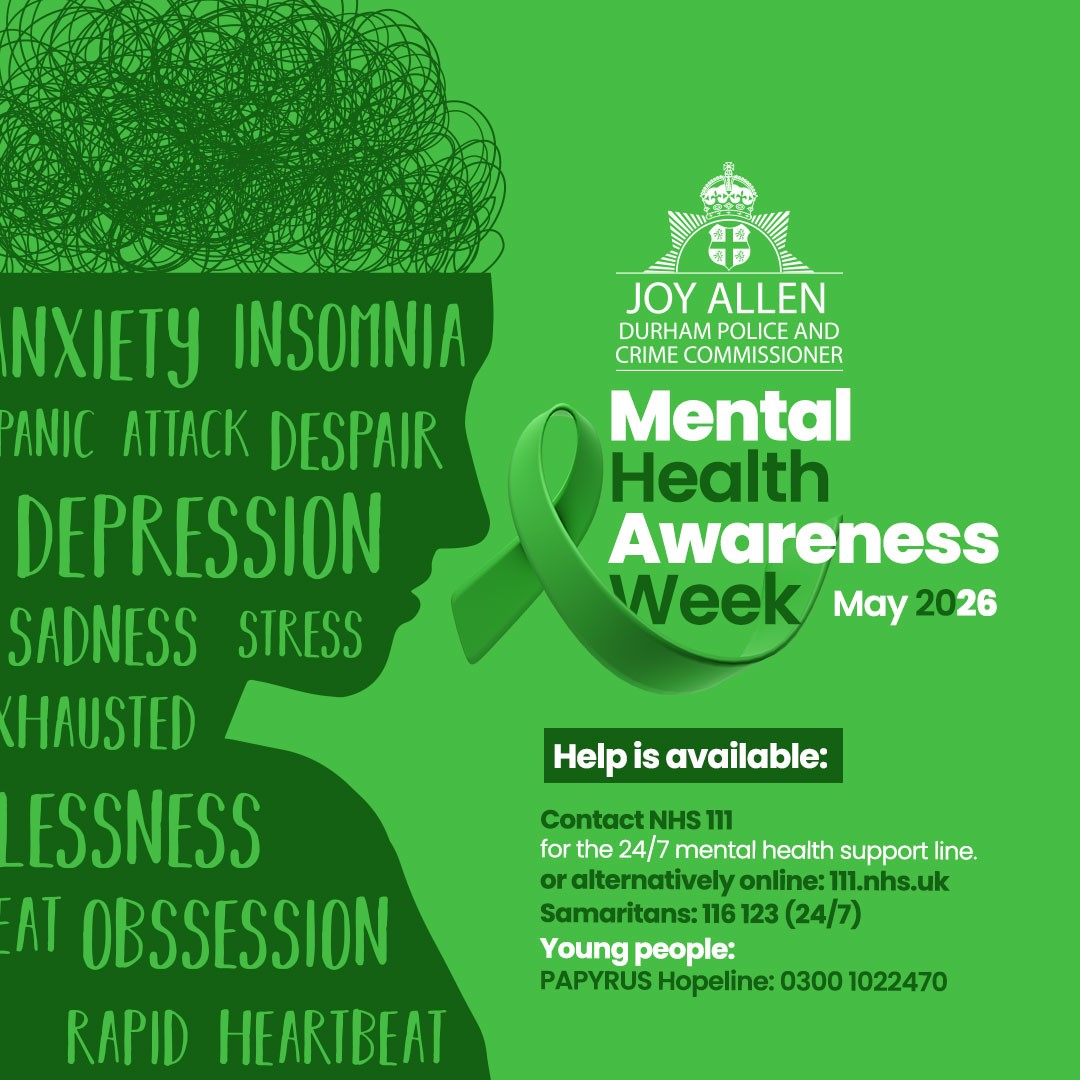
Police officers are increasingly responding to mental health crises, with national estimates suggesting around 20% of policing demand is linked to mental health and vulnerability. This increasing demand underlines why prevention, early intervention and access to the right support services is so important.
Mental Health Awareness Week is a moment to ask whether people are getting the right help at the right time. The Right Care, Right Person approach is clear: police should act where there is an immediate threat to life or serious harm, but they should not be the default response to every mental health need. Officers are often dealing with deeply vulnerable people in extremely challenging situations and it is essential that the right support is available from the right professionals at the right time.
For too long, too many people have reached crisis point before support arrives. Mental health cannot therefore be viewed purely as a health issue. It is also a community safety issue. The earlier we support vulnerability, the less likely it is to escalate into crisis, exploitation, offending or harm.
We must also recognise the impact this work has on our police officers and staff themselves. Day after day, they respond to road deaths, suicides, murders, domestic abuse, child cruelty and traumatic incidents that most people thankfully never have to witness. Behind the uniform are human beings carrying those experiences home with them. Supporting the mental health and wellbeing of officers and staff is therefore essential.
As PCC, I hold Durham Constabulary to account on how vulnerable people are treated, including scrutiny of Section 136 powers, custody practices and the national Right Care, Right Person approach. We must ensure people experiencing mental ill health are supported compassionately and appropriately, while also ensuring policing resources remain focused on fighting crime and keeping communities safe.
Through partnership working with health services, local authorities, charities and community organisations,we are also investing in prevention and early intervention projects that strengthen resilience and provide positive opportunities for young people and families.
Mental Health Awareness Week should also remind us to check in on one another. Sometimes a conversation, a listening ear or a small act of kindness can make a significant difference. Mental health awareness must become mental health action.
Building safer, stronger, and resilient communities means continuing to work together with compassion, understanding and determination, ensuring nobody is left struggling alone.
If you need support:
Ends
PCC Joy Allen explains why the disturbing culture of people driving dangerously, filming and sharing it puts their lives and that of others at risk
PCC Joy Allen has welcomed the Government's call for videos depicting dangerous driving to be removed from social media platforms.
PCC Joy Allen on why she has established the Criminal Justice Policy Roundtable to confront some of the biggest justice system failings


