
With horse riders being among the most vulnerable road users, Police and Crime Commissioner Joy Allen explains, in her own words, why she will continue working with partners such as the British Horse Society to raise awareness and improve their road safety.
Every time a driver passes a horse too quickly or too closely, they are gambling with a life.
Last year alone 59 horses died following a road incident and 82 horses were injured on UK roads, while 86 riders and carriage drivers were injured. In total, over 2,800 incidents involving horses were reported to the British Horse Society during 2025.
Sadly these shocking figures only tell part of the story. The British Horse Society estimates that only around one in ten of these incidents are reported, meaning the real scale of danger on our roads is likely far greater.
Recently I was contacted by a family in our county who experienced every rider’s worst nightmare when their horse was struck by a vehicle and suffered fatal injuries. The trauma for the rider and those present is something no one should ever have to witness.
Sadly, this was the second horse death brought to my attention in recent months. Incidents like these are deeply distressing and, in many cases, entirely preventable.
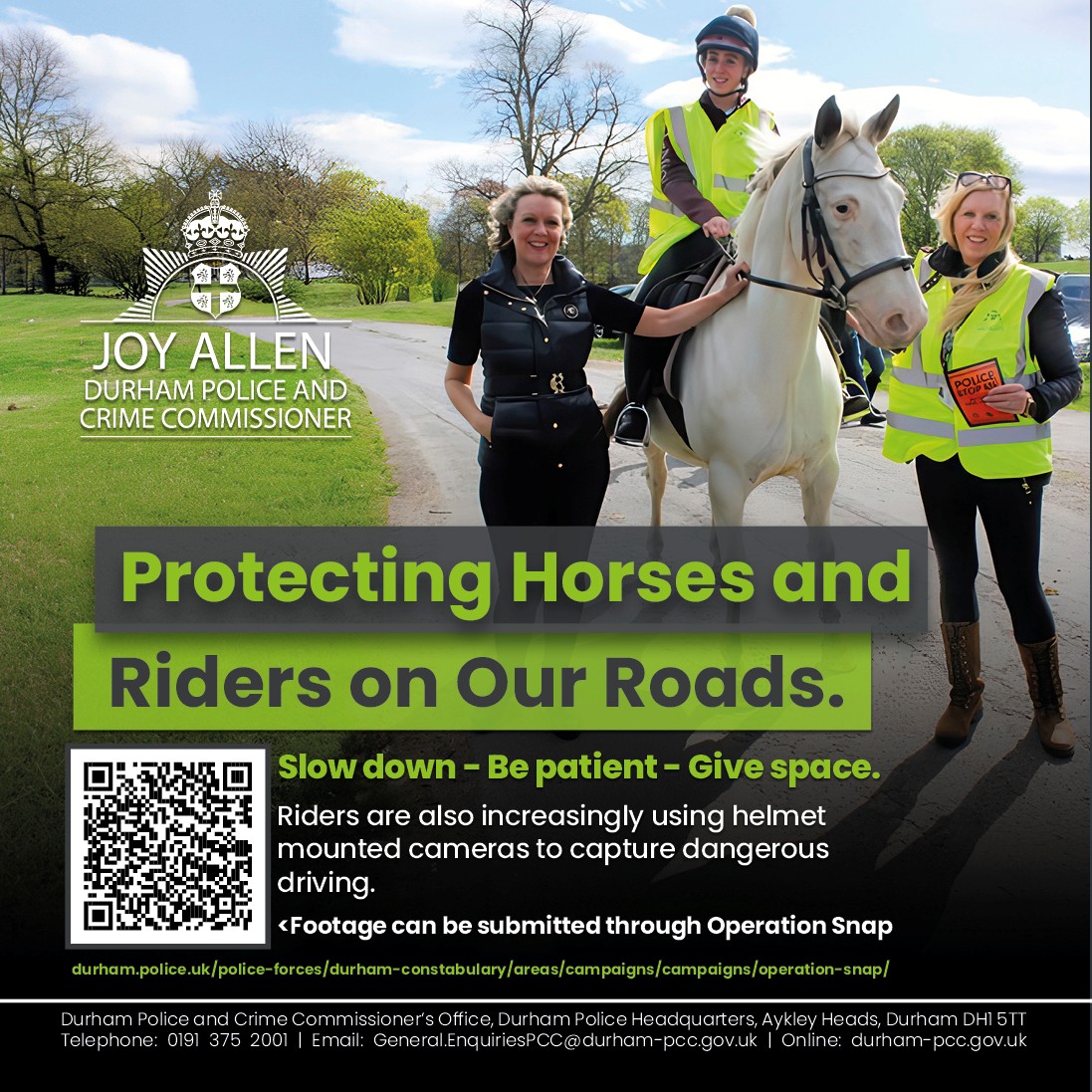
Horse riders are among the most vulnerable road users. Horses are powerful animals, but they are also easily startled. A vehicle passing too fast, too close or revving loudly can cause a horse to panic in seconds, putting both rider and driver in serious danger.
The British Horse Society reports that over 80 per cent of incidents occur because vehicles pass horses too quickly or too closely, while one in three riders report experiencing road rage or abuse from drivers.
That is why the Highway Code is clear.
Under Rule 215, drivers must slow down when approaching horses and pass them at no more than 10mph, leaving at least two metres of space. Drivers should avoid revving engines, sounding horns or accelerating suddenly.
Ignoring these rules is not just inconsiderate - it can be criminal. Dangerous or careless driving under the Road Traffic Act 1988 can result in penalty points, heavy fines, driving bans or even imprisonment where serious injury occurs.
Education is vital, but enforcement also matters.
Durham Constabulary runs Operation Close Pass, raising awareness and tackling dangerous behaviour on rural roads. On a positive note riders are also increasingly using helmet-mounted cameras to capture dangerous driving. Footage of reckless drivers can be submitted through Operation Snap, enabling police to investigate and take action against drivers who are putting precious lives at risk.
Following the recent tragedy locally, further steps are being taken by our force. The powerful National Police Chiefs’ Council training video, “It’s Not Just A Horse,” has now been circulated to officers in Durham to help them respond compassionately and effectively when incidents involving horses occur.
As Police and Crime Commissioner for Durham and Darlington, and nationally as Joint Lead for Roads Policing with the Association of Police and Crime Commissioners, I will continue working with partners such as the British Horse Society to raise awareness and improve road safety.
But ultimately,every driver has a responsibility.
SLOW DOWN. BE PATIENT. GIVE SPACE.
Because when you see a horse on the road, a few seconds of care could prevent a lifetime of heartbreak.
Drive dead slow. Lives depends on it!
Ends
PCC Joy Allen has welcomed the Government’s decision to block the early release of offenders convicted of unlawful killing
PCC Joy Allen explains why, when considering an E-Scooter as a gift, people should consider whether the recipient will be able to use it legally.
PCC Joy Allen is piloting a new programme of Community Listening Surgeries for victims and residents to safely share crime and ASB experiences


